

AI adoption, legacy software modernization, cybersecurity, infrastructure costs and IT workforce capacity are five priorities technology leaders should consider when preparing their 2027 IT budgets.
Looking across STEP Software’s 2026 technology coverage, one theme connects these seemingly different challenges: organizations need to get more measurable value from their existing technology while investing selectively in the capabilities, security and expertise required for what comes next.
For CIOs, CTOs, and business leaders, this means looking beyond next year’s project list. It means understanding where technology spending is increasing, where risk is accumulating and which investments will make the business more capable, secure, and resilient.
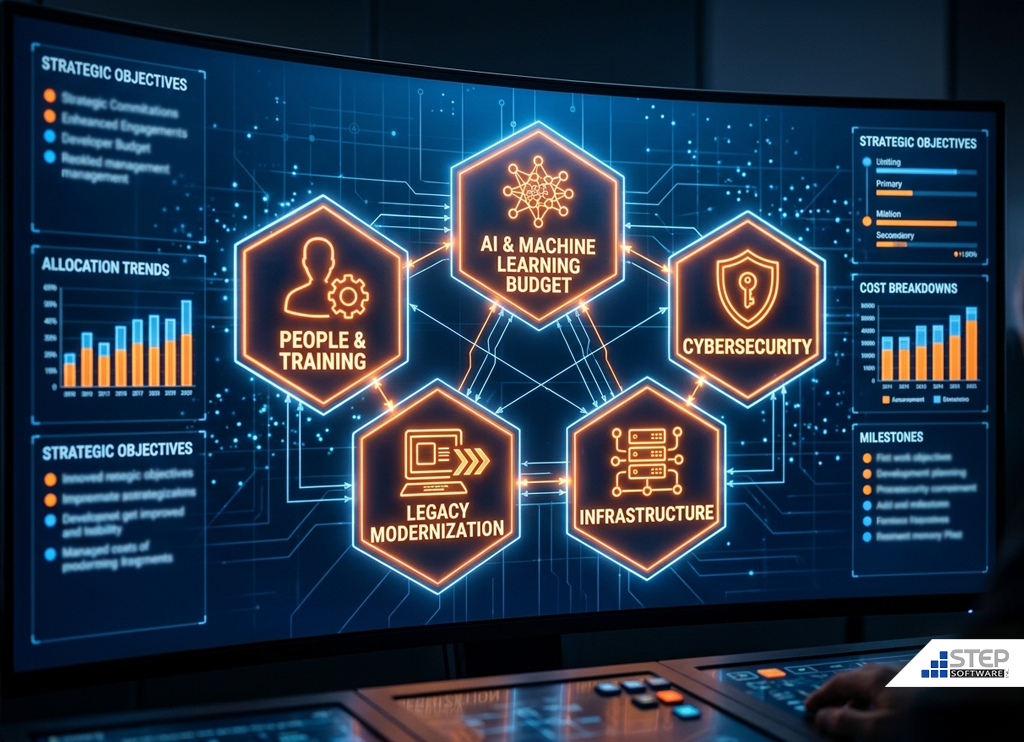
Here are five trends from 2026 that deserve a place in the 2027 budget conversation.
1. AI Adoption Is Creating New Costs and New Technical Debt
AI has moved quickly from experimentation into everyday business operations. Organizations are adopting AI assistants, automation tools, analytics platforms, and AI-assisted software development. But implementation is only one part of the investment.
The FinOps Foundation’s 2026 State of FinOps report found that 98% of surveyed practitioners were managing AI spend, up from 31% two years earlier. AI cost management has become a significant technology-finance concern.
The budget challenge is that AI spending extends well beyond software licences. It can include API consumption, infrastructure, data preparation, integration, security, governance, testing, employee training and ongoing maintenance.
There is another cost to consider: AI technical debt. Rapidly generated code, poorly integrated tools and features that employees do not use can create additional maintenance and support work without delivering the expected return.
STEP explored this issue in AI Technical Debt: The Hidden Cost, Can You Feel It?, examining why faster adoption does not automatically translate into better software or business outcomes.
What to budget for in 2027:
- AI licensing, API, and infrastructure consumption.
- Data quality, integration, and governance.
- Security reviews and software testing.
- Training, maintenance, and support.
- Measurement of adoption, productivity, and business value.
The question to ask: Are our AI investments solving measurable business problems, or are we paying to maintain capabilities employees are not using?
2. Legacy Modernization Is a Financial Decision, Not Just a Technology Decision
Replacing old software can be expensive. Continuing to maintain it without addressing underlying problems can be expensive, too.
Throughout 2026, STEP examined how technical debt, poor data quality and aging applications affect business performance. The common lesson is that postponing improvements does not eliminate the cost. It often transfers that cost into future maintenance, project delays, operational risk, and reduced flexibility.
In Buried in Technical Debt, STEP explored how seemingly reasonable short-term decisions can accumulate into long-term business constraints.
Modernization does not always mean replacing an entire application. It might involve improving performance, updating a user interface, replacing an unsupported component, strengthening integrations, or modernizing selected services while preserving valuable business logic.
The right approach depends on the system, its business importance, its condition, and the cost of change. The goal is to invest where modernization creates measurable value, not simply because a system has been around for a while.
What to budget for in 2027:
- Software and technical debt assessments.
- Application stabilization and maintenance.
- Incremental modernization and integration.
- Data quality and database optimization.
- Testing, documentation, and knowledge transfer.
The question to ask: Which existing applications are costing us more to maintain than they should, and what can we improve without starting from scratch?
3. Cybersecurity Debt Is Becoming a Budget Problem
Cybersecurity is no longer just a matter of purchasing the right tools. Organizations also need to understand the security weaknesses accumulating inside their software, infrastructure, integrations, and user-access environments.
Unresolved vulnerabilities, outdated dependencies, unsupported software, excessive permissions, and undocumented integrations can all contribute to cybersecurity debt.
STEP’s 2026 coverage explored several sides of this challenge, including Credential Sprawl, Cybersecurity Debt: Risks & Budget 2027 and the risks associated with aging software components.
The NIST Cybersecurity Framework 2.0 provides a useful structure for organizations looking to assess and manage cybersecurity risk. Its emphasis on governance, identification, protection, detection, response, and recovery reinforces the need to treat security as an ongoing business responsibility.
For budget planning, the challenge is making the case for remediation before a weakness becomes an incident. A security assessment is useful only if the organization has the resources and expertise to address what it uncovers.
What to budget for in 2027:
- Independent security assessments of critical applications.
- Vulnerability and dependency reviews.
- Identity and access management.
- Software patching and maintenance.
- Security testing, backup, and disaster recovery.

The question to ask: What security risks are we carrying forward because remediation has repeatedly been deferred?
4. Infrastructure and Cloud Costs Need Active Management
Infrastructure spending is becoming more complicated as organizations add cloud services, APIs, integrations, data-intensive applications, and AI capabilities.
The cost of running a business application is not limited to hosting. It can include processing, storage, bandwidth, API calls, monitoring, security services, licensing, and third-party integrations.
STEP’s The Cost of Doing Data: What the Data Center Boom Means for IT Budgets and its more recent article on 2027 IT Budgets: Web Services Traffic Management explore why infrastructure costs deserve closer attention.
A marketing campaign, new customer portal or sales automation integration can increase application traffic and consumption without IT being aware of the change. The result may be a higher infrastructure bill, slower performance, or unexpected capacity requirements.
The FinOps Foundation’s 2026 research also highlights how technology cost management is expanding beyond cloud infrastructure to include AI, SaaS, software licensing and data centres.
What to budget for in 2027:
- Cloud and infrastructure consumption reviews.
- API, bandwidth, and application traffic monitoring.
- Database and workload optimization.
- Capacity planning, resilience, and disaster recovery.
- Data governance and sovereignty requirements.
The question to ask: Are our infrastructure costs increasing because the business is growing, or because our systems are inefficient?
5. IT Capacity and Expertise Remain Essential Investments
Technology plans do not deliver themselves. They require people with the time, experience, and technical knowledge to implement, maintain and support them.
In 2026, STEP explored the human side of technology through topics including AI-related productivity pressures, time away from technology and neurodiversity in tech. These conversations point to an important budget consideration: even the best technology strategy can fail when the people responsible for delivering it are stretched too thin.
Research from Robert Half’s 2026 technology priorities and opportunities report found that 95% of surveyed technology leaders said their teams lacked the staff and skills needed to achieve their top priorities.
Hiring is not always the only answer. Specialized third-party software support can help organizations address temporary capacity gaps, access expertise that is difficult to recruit and keep important projects moving.
External development, QA, application maintenance and technical advisory support can also give internal teams more time to focus on strategic priorities.
What to budget for in 2027:
- Training and professional development.
- Knowledge transfer and documentation.
- Specialist software development and QA support.
- Application maintenance and on-call support.
- Strategic staff augmentation.
The question to ask: Does our team have the capacity and expertise to deliver the projects we have already approved?
2027 IT Budget Planning: Five Questions to Ask Before Approving Spend
Before finalizing next year’s technology budget, consider these five questions:
- AI: Have we accounted for the full cost of implementing, securing, and maintaining AI tools?
- Legacy systems: Do we understand the cost and risk of maintaining our existing applications?
- Cybersecurity: Have we identified and budgeted for outstanding vulnerabilities and security debt?
- Infrastructure: Are cloud, API, hosting, and application traffic costs being monitored and optimized?
- People: Do we have enough internal capacity and specialist expertise to deliver our technology roadmap?
These questions help connect technology spending to business outcomes. They also make it easier to explain why an investment is necessary, what it will accomplish and what may happen if it is deferred.
Final Thoughts: Make 2027 the Year of Smarter Technology Investment
The five trends discussed here are connected. AI adoption, cybersecurity, legacy modernization, infrastructure costs and technical talent are not separate challenges. They are interconnected parts of the same business technology strategy.
The opportunity for technology leaders in 2027 is not simply to spend more. It is to make better decisions about where existing technology needs attention, where new investment will deliver value and where outside expertise can help the organization move forward.
You do not necessarily need a bigger technology budget. You need a smarter one.
Is Your IT Strategy Ready for 2027?
STEP Software helps organizations get more from their technology investments through custom software development, legacy system modernization, application stabilization, cybersecurity assessments, software maintenance, QA, and specialist development support.
Whether your challenge is an aging application, growing technical debt, rising infrastructure costs or an internal team that needs additional expertise, STEP can help you identify practical next steps.
Before committing next year’s budget to another platform, subscription, or infrastructure upgrade, take a closer look at where your existing technology could be working harder.
Book a 30-minute consultation with STEP Software and start the conversation.


