

Election Technology, Cybersecurity, and the Fight for Information Integrity
Elections are often described as a democratic process. But, for the people responsible for delivering them, they are also a complex technology operation with immovable deadlines, demanding security requirements and extraordinarily little tolerance for system failure.
Behind every ballot are software applications, databases, networks, hardware, third-party providers, and teams responsible for keeping everything running. Increasingly, there is another layer to manage too: technology used to identify cyber threats, coordinated misinformation, synthetic media and attempts to manipulate the information voters receive.
Election technology is evolving quickly. So are the threats.
For election administrators and IT professionals, the challenge is to build systems that are reliable, accessible and secure while maintaining the transparency required for public trust.
Election Technology Is Much More Than Voting Machines
A modern election depends on an interconnected collection of applications and infrastructure. Voting equipment may receive the most attention, but much of the technology operates behind the scenes.
The software environment can include:
- Voter registration and election management systems that maintain electoral records, manage eligibility information and coordinate election activities.
- Electronic poll books that help election workers verify registrations and manage voter check-in.
- Ballot design and printing software that prepares ballots for different electoral districts and voting methods.
- Vote tabulation systems that process ballots scanned by electronic counting equipment.
- Election results platforms that aggregate, validate, and publish results.
- Public-facing websites and digital services that provide registration information, polling locations, voting instructions and accessibility support.
- Learning management systems that train both temporary election workers and permanent staff.
- Cybersecurity and audit systems that manage identities, permissions, system activity and security monitoring.
The hardware supporting these services can include ballot scanners, electronic voting devices, servers, laptops, printers, networking equipment, asset-tracking technology, and assistive devices.
The Canadian Centre for Cyber Security’s guidance on electronic vote tabulators explains some of the security considerations involved in deploying and maintaining this equipment.
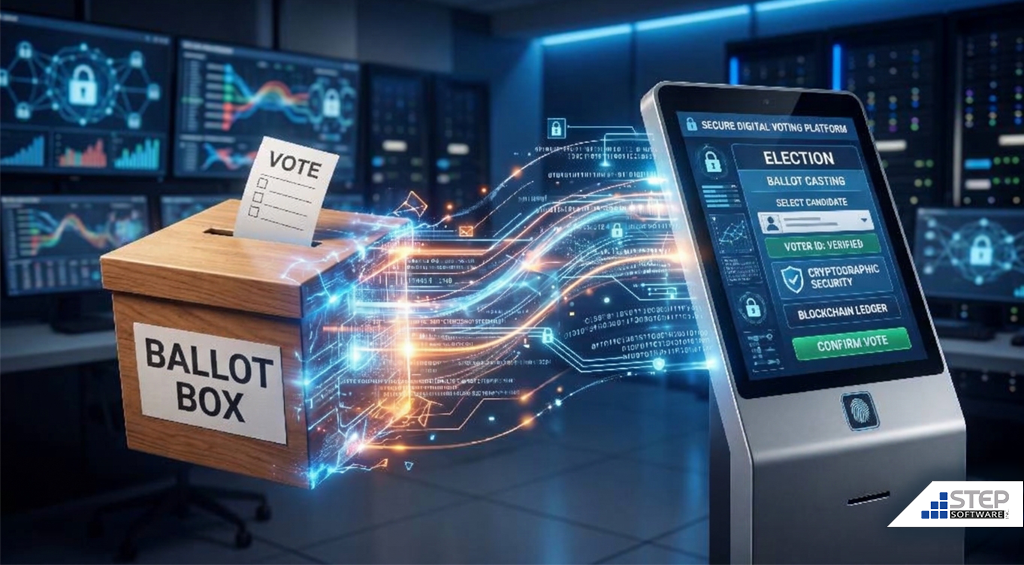
For IT teams, the important distinction is that election infrastructure is not one application. It is an ecosystem. A weakness in one component can create operational or security problems elsewhere.
Canada, the United States, and the Global Picture
Election technology is not deployed uniformly, even between neighbouring countries.
In Canada, federal elections rely on paper ballots counted by election workers. Electronic tabulators are not used to count ballots in federal elections. However, provincial, and municipal authorities have adopted different approaches, including electronic tabulation and, in some cases, online or telephone voting.
The United States has a more decentralized system. State and local authorities select and operate their own voting equipment and election management systems. Voters may use hand-marked paper ballots, ballot-marking devices, optical scanners, and other approved equipment.
The US Election Assistance Commission reported in May 2025 that more than 98% of US authorities used voting systems producing a paper record of every vote. Its paper-based voting systems policy emphasizes the importance of independent auditability.
Internationally, the technology landscape is even more varied. Electronic voter registration, biometric identification, electronic tabulation, online voter services and internet voting are being used or explored in different combinations.
International IDEA’s 2025 report on online voting examines these approaches and the conditions needed to implement them responsibly.
The lesson is that technology must fit the authority, legal framework, and operational environment. There is no universal election technology solution.
Accessibility, Voter Engagement and Better Election Administration
One of the strongest arguments for election technology is its potential to make participation easier.
Accessible websites, multilingual information, assistive technology compatibility and clear digital instructions can help voters understand registration requirements, locate polling stations, and determine which voting options are available to them.
Electronic poll books can streamline check-in, while election management software can help administrators coordinate staffing, equipment, supplies and polling locations.
Online registration and overseas voter portals can also reduce administrative barriers. International IDEA’s review of the 2025 election year documented how digital services and special voting arrangements helped reach expatriates and migrant workers in several authorities.
Technology can improve the voter experience, but it does not automatically increase turnout. Turnout is influenced by many factors, including electoral rules, public confidence, convenience, and political engagement.
Election technology’s objective should be to remove unnecessary barriers without compromising ballot secrecy, voter privacy or the ability to verify results.
The New Front Line: Detecting Election Interference
Perhaps the most notable change in election technology is happening outside the voting booth.
Election interference increasingly involves attempts to manipulate the information environment surrounding an election. These activities can include coordinated social media campaigns, fake accounts, automated engagement, misleading political content, deepfake audio and video, phishing attacks and cyber intrusions.
The scale is worth examining.
International IDEA’s Review of the 2025 Year of Elections examined 39 national elections. Its findings included:
- Disinformation and online manipulation were documented in at least 62% of the elections monitored.
- At least 10% experienced reported cyberattacks during the electoral cycle.
- Electoral management malfunctions were recorded in at least 49% of the elections.
These figures cover distinct types of electoral challenges. They should not be interpreted as evidence that technology caused every incident. They do, however, demonstrate why election administrators need better visibility into both their systems and the information circulating around them.
Canada’s Communications Security Establishment provided another important measure in its 2025 update on cyber threats to Canada’s democratic process.
Researchers identified 102 reported cases of generative AI being used to interfere with or influence 41 elections between 2023 and 2024, representing 27% of the elections examined. These cases included synthetic disinformation, online amplification, and harassment of political figures.
Canada’s 2025 federal election also provided a domestic example. The retrospective report on the 45th General Election documented a coordinated and inauthentic information operation on WeChat. Amplified articles received an estimated one to three million views, although officials could not confirm how many originated in Canada.
This is not simply a social media problem. It is an information integrity problem with cybersecurity implications.
How Technology Is Being Used to Detect Election Threats
Election monitoring increasingly combines automated analysis, cybersecurity tools, open source intelligence, and human investigation.
Some of the most relevant capabilities include:
1. Social media monitoring and coordinated behaviour detection
Social listening and analytics platforms can process large volumes of public online content to identify unusual patterns.
Rather than examining individual posts in isolation, analysts can look for:
- Large groups of recently created or suspiciously similar accounts.
- Unusual spikes in posting, sharing or engagement.
- Repeated messages appearing across multiple platforms.
- Coordinated amplification of specific narratives.
- Automated accounts creating the appearance of widespread public support.
Network analysis can help identify relationships between accounts and content-sharing patterns that would be difficult to spot manually.
2. AI-generated content and deepfake detection
Machine learning tools can help identify potentially manipulated images, audio, and video. Analysts may examine visual inconsistencies, audio characteristics, metadata, and signs of synthetic generation.
The UK Electoral Commission provided a useful example in its 2026 election information monitoring pilot. Its tools processed approximately three million online posts, with human reviewers identifying 219 political deepfakes from 60 unique accounts. Fifteen posts met its threshold for posing a risk to electoral integrity.
Importantly, the Commission reported no evidence of deliberate use of highly convincing political deepfakes to interfere with those elections.
That distinction matters. Detection tools identify material requiring investigation. They do not automatically establish malicious intent or prove that an election was compromised.
3. Cybersecurity monitoring and anomaly detection
Election infrastructure also needs conventional enterprise security capabilities.
Security information and event management (SIEM), endpoint detection and response (EDR), intrusion detection, threat intelligence and network monitoring can help identify suspicious activity across election systems.
Examples include:
- Unusual login attempts or access outside normal working patterns.
- Unauthorized changes to voter records or system configurations.
- Suspicious network traffic and attempted denial-of-service attacks.
- Phishing activity targeting election workers.
- Unexpected changes to election websites or results reporting services.
- Unusual data transfers or access to sensitive information.
These tools become particularly valuable when connected to well-maintained audit logs, identity management and incident response procedures.
4. Open-source intelligence and threat intelligence
Election security teams can also monitor publicly available information for emerging threats, impersonation websites, leaked credentials, malicious domains and coordinated influence activity.
The goal is to identify potential risks early enough to investigate and respond before they disrupt election operations or mislead voters.
However, monitoring must be carefully governed. It should respect privacy, applicable laws, and legitimate political expression. Unusual online activity is not automatically evidence of foreign interference or wrongdoing.
5. Human verification and coordinated response
Technology can identify patterns, but experienced analysts still need to determine what those patterns mean.
The UK’s 2026 pilot demonstrates the value of combining automated processing with human review. Canada’s Security and Intelligence Threats to Elections Task Force provides another example of coordinated monitoring involving intelligence, cybersecurity, and law enforcement organizations. The Canadian government’s SITE Task Force information describes this collaborative approach.
The most effective detection environment is therefore not simply an AI tool or a monitoring dashboard. It is a process that connects technical signals, trained people, verified information and a clear response plan.
What Happens When Election Systems Fall Behind?
Election systems have demanding operational requirements. They must work under pressure, support large volumes of activity, and remain dependable when there is little time to troubleshoot.
Unsupported software, delayed patches and security upgrades, outdated hardware, poor documentation, and untested integrations create unnecessary exposure.
For IT professionals, these risks are familiar. And the answer is not necessarily to replace everything. Modernization can involve targeted upgrades, better integration, improved documentation, stronger access controls and more effective testing.
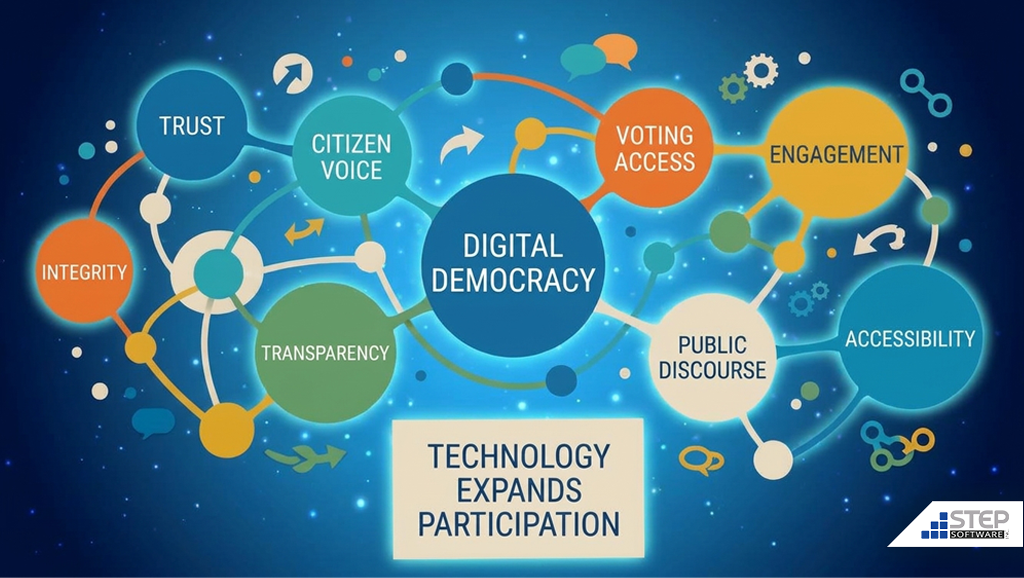
The priority is understanding which systems are critical, where the weaknesses exist and what needs attention first.
How STEP Software Can Help
Election technology requires many of the same capabilities as other mission-critical software: dependable architecture, secure development, rigorous testing, accessible interfaces, reliable data handling and practical recovery planning.
STEP Software can support organizations and technology providers through:
- Custom software development: Building applications and digital services around operational requirements, reliable workflows, and accessible user experiences. Explore our Custom Software Division.
- Software audits: Reviewing existing applications, identifying technical and maintainability concerns, and establishing remediation priorities. Learn about our software audit services.
- Quality assurance and testing: Validating application functionality, integrations, data handling and system behaviour before deployment. Read about quality assurance at STEP.
- Legacy modernization: Stabilizing and improving aging applications without automatically requiring a complete replacement. Visit our Legacy Software Division.
- Advisory and staff augmentation: Helping teams assess technical risks, plan improvements and access specialist expertise when internal resources are stretched. Explore our Advisory Division and staff augmentation services.
STEP Software is not an election administration authority or voting-system certifier. Our role is to bring software development, testing, modernization, and technical problem-solving expertise to organizations that need dependable systems.
For election administrators and technology suppliers, that can mean improving application reliability, strengthening integrations, addressing technical debt, and building systems that are easier to maintain and secure.
Election Technology Must Earn Public Trust
A recent global analysis of AI in electoral administration, by the United Nations Development Programme, draws on a survey of 53 electoral management bodies across six regions. It examines how AI is being used, considered, and governed, including opportunities for efficiency, accessibility, and voter engagement alongside concerns about cybersecurity and electoral integrity.
The direction is clear: election technology will continue to evolve, and so will the responsibilities of the people who design, operate, and protect it.
There is no single application that can guarantee election integrity. Trust depends on the entire technology environment: secure infrastructure, reliable software, independent verification, transparent processes, and people who know how to respond when something goes wrong.
Technology should make elections easier to administer and easier for people to participate in. It should also make the process more accountable, not less.
For election technology professionals, that is the real measure of success: systems that work, information that can be trusted and results that can be independently verified.


