

May is Mental Health Awareness Month, and while many organizations acknowledge it with webinars, green ribbons, or reminder emails, the reality is that workplace mental health has become a year-round business issue, especially in technical industries.
For technology professionals, the workplace pressure has intensified dramatically over the last few years. Between rapid AI adoption, always-on digital environments, tight deadlines, cybersecurity threats, and constant upskilling demands, many employees are quietly operating in survival mode.
The challenge for business leaders is no longer simply recognizing mental health. It’s understanding how deeply it impacts productivity, retention, innovation, and organizational stability.
The Mental Health Reality in Technical Workplaces
Technology has always been a high-pressure industry, but the acceleration of AI adoption is adding a new layer of complexity and angst for many employees.
Technical teams are now expected to:
- Learn AI tools while maintaining existing systems
- Increase productivity without increasing burnout
- Adapt to rapidly evolving technologies, with little to no training
- Do more with smaller teams
Last year, in one of Deloitte’s annual surveys they found that 40% of Gen Z employees and 34% of millennials report feeling stressed or anxious all or most of the time, with work being a major contributor.
Long working hours, lack of recognition, and toxic workplace cultures ranked among the leading causes of workplace stress. In technical environments, those stressors tend to multiply.
Developers, IT administrators, and operations teams often deal with:
- Constant context switching
- Incident response pressure
- Cybersecurity threats and emergencies
- Overnight deployments
- Relentless expectations to stay current with emerging technologies
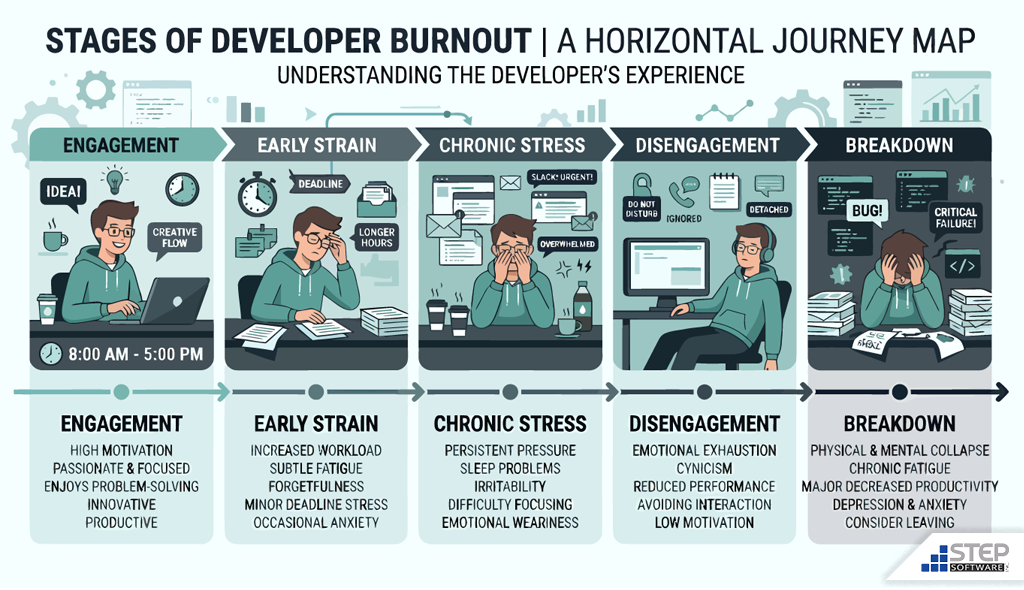
A recent discussion on Reddit highlighted how burnout frequently stems from nonstop deadlines, on-call stress, and the feeling of never being able to fully disconnect. For many technical workers, the issue is not a lack of passion. It’s sustained cognitive overload.
AI Is Increasing Both Opportunity and Pressure
AI is creating enormous opportunities for businesses, but it is also changing workplace expectations at an unsustainable pace.
Many organizations hoped AI would reduce workloads. Instead, many employees report that AI has increased complexity.
A recent Workday study found employees are losing nearly a full workday each week navigating disconnected AI tools and fragmented systems. Even more concerning, 77% of respondents linked this complexity to increased stress and burnout.
This is particularly difficult for technical teams, who are often responsible for:
- Implementing AI systems
- Maintaining legacy infrastructure
- Validating AI-generated outputs
- Training other departments on emerging tools
Researchers are also beginning to study what they call ‘AI-induced skill erosion,’ where overreliance on AI slowly weakens human expertise and professional confidence over time. This creates a difficult balancing act for leaders –embracing innovation without exhausting the people expected to manage it.
Different Generations, Different Pressures
Mental health challenges affect every generation differently, and assuming a general policy or wellness program will solve the problem for every staff member is fuel for burnout.
Gen Z and Younger Millennials
Younger workers have entered or are entering careers during a period of economic instability, rapid automation, and social pressure tied to constant digital connectivity.
According to Deloitte’s global workforce research:
- Only about half of Gen Z workers rate their mental well-being positively
- Over half are living paycheck to paycheck
- Many are prioritizing work-life balance over traditional career advancement
This generation is also highly aware of burnout and more likely to openly discuss mental health challenges at work.
Gen X & Senior Technical Leaders
Gen X, often seen as the forgotten middle child, are facing the highest reported levels of burnout. These tenured employees, who make up the majority of senior staff and mid career professionals, are reporting that 42% of them feel chronically overwhelmed at work.
Mid-career professionals often face a different type of pressure:
- Leadership responsibilities
- Family obligations for both children and aging parents
- The expectation to rapidly adapt to AI-driven transformation
- Drastically altered career progression and retirement trajectories due to older generations staying in their positions longer
Leadership burnout is being linked to decision fatigue and fragmented systems. For many senior technical professionals, the added pressures of trying to modernize aging infrastructure while simultaneously supporting staff who are already stretched thin is a delicate juggling match.
Why Mental Health Education Matters
Mental health education in the workplace is not simply about awareness campaigns.
It’s about:
- Educating managers on how to recognize burnout
- Reducing stigma around mental health conversations
- Helping employees identify stress before crisis points
- Creating environments where people feel psychologically safe asking for support
Organizations that ignore mental health often pay for it elsewhere:
- Higher turnover
- Increased absenteeism
- Lower engagement
- Reduced innovation
- Growing healthcare costs
Technical employees are particularly vulnerable because high-performing workers often hide stress until it becomes severe. The ‘quiet burnout’ problem in tech is real.
Mental health related absenteeism is on the rise globally, ranging from 30 to 62% depending on industry and location, with the Australia claiming an alarming 161% surge over the past 10 years.
In technical industries, losing experienced staff is especially expensive.
When senior developers, engineers, or IT specialists leave due to burnout, organizations lose:
- Institutional knowledge
- Operational stability
- Mentorship capacity
- Project momentum
Replacing technical talent is difficult enough. Replacing burned-out senior technical talent during an AI skills shortage is even harder.
Burnout is no longer an individual problem, its an infrastructure risk.
What Leaders Can Actually Do
The good news is that meaningful improvements do not always require massive budgets.
Normalize Conversations Around Mental Health
Leaders who openly discuss stress management and mental wellness reduce stigma significantly.
Mental health should be treated like operational health, not a taboo topic.
Reduce Unnecessary Cognitive Load
Not every inefficiency needs to become a human problem.
Disconnected systems, excessive meetings, and constant notifications create mental exhaustion. Simplifying workflows matters.
Invest in Training, Not Just Tools
AI adoption without training increases anxiety. AI Literacy is an all-hands-on deck responsibility.
Employees need:
- Realistic expectations
- Proper onboarding
- Confidence building support
- Mentorship around new and emerging technologies
Encourage Sustainable Work Practices
Technical teams often celebrate overwork as commitment. That culture eventually becomes expensive.
Encouraging breaks, boundaries, flexible scheduling, and encouraging usage of accrued vacation time improves overall long-term performance.
Provide Accessible Mental Health Resources
Different generations access support differently. Organizations should offer multiple channels, including:
- Employee Assistance Programs (EAP)
- Virtual therapy options
- Peer support programs
- And digital wellness resources
Helpful mental health resources to share with your team include:
Canada:
- Canadian Mental Health Association
- Mental Health Commission of Canada
- Centre for Addiction and Mental Health (CAMH)
- eMental Health.ca
USA:
Final Thoughts
Mental Health Awareness Month matters because it reminds organizations of what is easily forgotten during deadlines and quarterly targets.
Technology is still built, secured, maintained, and operated by people.
AI may improve efficiency.
Automation may reduce repetitive tasks.
But neither replaces the need for psychologically healthy teams.
The businesses that thrive long-term will not simply be the ones adopting the newest technologies the fastest. They will be the organizations that understand sustainable performance depends on healthy people, healthy leadership, and workplaces where employees feel supported, not just optimized.
If you or your team is heading towards burnout and need a helping hand, please give our advisors a call, no pressure, no pitch, just tech leaders who’ve been there.


