

Most business leaders understand financial debt; borrow money today, pay interest tomorrow.
Technical debt works much the same way.
Every time leadership delays a software update, postpones a modernization initiative, extends the life of a legacy application by opting for a quick fix over a long-term solution, the business takes on technical debt.
Sometimes that decision is necessary, budgets are limited, priorities shift, and businesses need to keep moving. The problem is, technical debt accumulates interest, and right now, the interest rate has never been higher and thanks to AI adoption there is a compounding effect.
Why Technical Debt Is Becoming a Bigger Problem
For years, organizations could get away with maintaining aging systems and delaying modernization projects. Legacy applications continued to run, employees learned workarounds, and businesses absorbed the occasional inefficiency.
Today’s technology landscape is much less forgiving.
Organizations are simultaneously managing cybersecurity risks, cloud adoption, regulatory requirements, data governance initiatives, and increasing customer expectations. Each of these priorities becomes exponentially more difficult when built on aging infrastructure.
According to a 2020 report from McKinsey, technical debt accounted for between 20% to 40% of the value of an organization’s entire technology estate. Recent Gartner reports confirm those estimates have not changed over the last six years.
What was once viewed as a future problem is increasingly becoming a current business risk, and now accelerated by AI and the additional technical debt it can create.
What’s The TDR?
While technical debt rarely appears as a line item on a budget, knowing your TDR (technical debt ratio) (as a percentage) can help leaders put a tangible value on the problem.
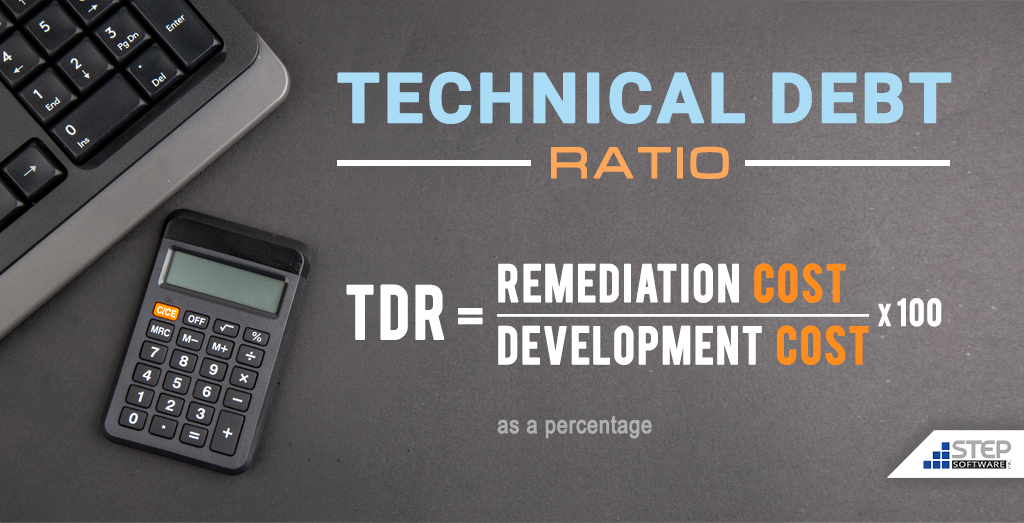
Anecdotal evidence indicates that tech debt shows up as:
- Delayed software projects
- Increased maintenance costs
- Security vulnerabilities
- Longer development cycles
- Employee frustration & burnout
- Reduced project agility
The full cost of technical debt is often spread across multiple departments, making it even more difficult to quantify.
Deloitte research indicates that decreasing an organization’s tech debt by 18% over 5 years can unlock 51% improvements in latent potential over the same period of time.
So, this begs the question, are you using TDR to determine a strategic path forward?
Why Cybersecurity Raises the Stakes
Over the past few years the growing concern about the connection between technical debt and cybersecurity risk has grown. Add legacy systems to the conversation and boardroom conversations are shining a spotlight on what’s at stake.
Legacy systems frequently contain:
- Unsupported software
- Outdated frameworks
- Limited monitoring capabilities
- Inconsistent security controls
Security debt, the unattractive and often unappreciated consequence of delayed modernization is turning ‘once secure systems’ into attractive targets for attackers. Each year legacy modernization projects are delayed increases both operational and security risks.
The question is no longer whether a legacy system can continue running.
The question is whether the business can continue accepting the risk.
Budget Season Is the Wrong Time to Discover Technical Debt
As organizations begin planning budgets for next year, many business leaders are focused on growth initiatives, cybersecurity investments, and operational improvements.
Unfortunately, technical debt often gets pushed down the priority list because it lacks the excitement of new projects.
That can be a costly mistake.
When a critical system fails unexpectedly, organizations can face:
- Emergency consulting costs
- Unplanned downtime
- Accelerated project timelines
- Lost productivity
- Business disruption
- Regulatory and Compliance exposure
Modernization projects are significantly easier to fund when they are planned proactively rather than initiated in response to a crisis. In many cases, the most expensive modernization project is the one that wasn’t planned for.
By comparison, a planned modernization roadmap allows leaders to spread investments over multiple budget cycles and align projects with strategic objectives. This is exactly the type of strategic budget allocation your CRO wants to hear.
Getting Ahead of the Problem
One of the biggest challenges organizations we work with face is understanding the true scope of their technical debt.
Many businesses know they have aging systems but struggle to determine:
- Which risks require immediate attention
- Which systems should be modernized first
- How much modernization will cost
- How to prioritize investments
This is where we STEP in and help.
Our team works with organizations to assess existing applications, evaluate technical debt, identify modernization opportunities, and create practical roadmaps that align with business goals and budget realities. In fact, many of our long-term clients started out with a tech debt audit and moved on to other modernization efforts over time.
We help companies identify the highest-value opportunities for improvement.
That may include:
- Modernizing legacy applications
- Improving system integrations
- Reducing maintenance complexity
- Enhancing security and performance
- Developing custom software solutions where commercial products no longer fit business needs
Most importantly, we help organizations make informed decisions before technical debt becomes a business emergency.
Final Thoughts
Technical debt is no longer just an IT issue. It has grown into a business planning issue.
Organizations that proactively evaluate their technology environments today are better positioned to control costs, reduce risk, improve security, and support future growth. Those that continue postponing modernization may find themselves blowing up their budget because of increased maintenance costs, project delays, cybersecurity exposure, and lost productivity.
As budgeting discussions for next year begin, now is the ideal time to ask an important question:
“Is your organization investing in innovation, or is it quietly paying interest on technical debt?”
The answer may surprise you and have a larger impact on next year’s budget than any modern technology initiative could.
Drop us a line if you would like to learn more about how we can help


