

Why Businesses Need to Care this Time
For years, discussions about cloud computing, software procurement, and data management focused primarily on cost, performance, and scalability.
However, with geopolitical tensions on the rise, digital sovereignty is once again erupting into heated conversations around boardroom tables across the globe.
What began as a concern for governments and critical infrastructure providers is rapidly becoming a business issue. Organizations are increasingly asking where their data resides, who controls it, which laws apply to it, and whether their technology vendors could become a source of operational risk.
For IT leaders already balancing cybersecurity, modernization, AI adoption, and budget constraints, digital sovereignty is quickly becoming another strategic priority that cannot be ignored.
So, What Is Digital Sovereignty?
At its core, digital sovereignty refers to an organization’s ability to maintain control over its data, digital infrastructure, software, and technology operations.
Traditionally, companies focused on data residency, meaning where data was physically stored. Today’s definition is broader.
Digital sovereignty considers:
- Where data is stored
- Who owns the technology platform
- Who operates the infrastructure
- Which legal jurisdictions govern access to the data
- How dependent an organization is on foreign technology providers
In practical terms, a company may host data locally but still be subject to foreign laws or vendor control through the technology provider it uses. Recent industry discussions increasingly frame sovereignty as operational control rather than simply geographic location.
Why Is Digital Sovereignty Newsworthy?
Digital sovereignty has moved into the spotlight largely because of growing geopolitical uncertainty and concerns about technology dependence.
In June 2026, the European Commission introduced a Technology Sovereignty Package designed to strengthen European capabilities in semiconductors, cloud infrastructure, digital services, and open-source software. According to the European Commission, the initiative aims to improve Europe’s digital autonomy and reduce dependence on foreign-controlled technology platforms. Canada is adopting a similar approach to ensure they can “stay in control’ of their digital future.
The issue extends beyond governments. Reuters recently reported that European policymakers are actively exploring ways to reduce dependence on non-European cloud providers for sensitive workloads, reflecting broader concerns about resilience, data control, and strategic autonomy.
How Is This Impacting Businesses?
Over the last decade, organizations rapidly adopted cloud platforms, SaaS applications, analytics tools, and collaboration software. In many cases, these investments occurred independently across departments.
The result is that many organizations now have limited visibility into where critical business data resides and how dependent they have become on specific technology providers.
Research published in 2026 examining digital sovereignty frameworks noted that organizations increasingly view sovereignty as a question of operational control, legal jurisdiction, and resilience rather than simply physical data location.
The Budget Challenge Nobody Planned For
Unfortunately, digital sovereignty concerns rarely emerge during annual planning cycles.
Many IT leaders are now being asked to evaluate cloud alternatives, reassess vendor relationships, and strengthen governance frameworks after budgets have already been approved.
This comes at a time when technology spending remains under pressure. Gartner forecasts worldwide IT spending will continue growing in 2026 as organizations simultaneously invest in modernization, cybersecurity, infrastructure upgrades, and emerging technologies.
For CIOs and technology executives, this creates a difficult balancing act. Every dollar allocated toward sovereignty initiatives may require reprioritizing existing modernization or transformation projects.
Why an Audit Should Come First
Before organizations begin replacing vendors or restructuring technology environments, they should first understand their current level of exposure.
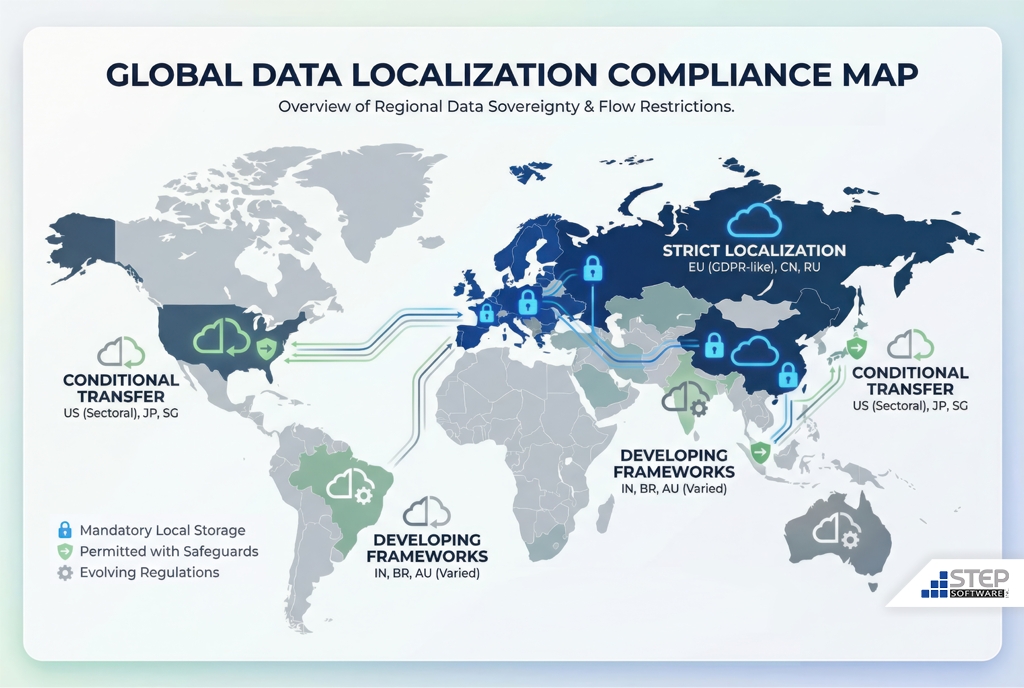
A digital sovereignty audit can identify:
- Critical data locations
- Vendor dependencies
- Regulatory exposure
- Data ownership concerns
- Opportunities to reduce risk
According to Deloitte’s research on digital sovereignty, organizations that establish clear visibility into data flows and vendor dependencies are better positioned to make strategic technology decisions while maintaining compliance and operational resilience.
Why Third-Party Assessments Are Often More Effective
Internal teams are frequently too close to the environment to evaluate it objectively.
They are also busy, burning out, and most technical teams are operating with less headcount today than they started the decade with.
Many IT departments are managing:
- Cybersecurity
- Infrastructure support
- Cloud operations
- Software maintenance
- Legacy systems
- AI initiatives
- Compliance requirements
Conducting a comprehensive sovereignty assessment requires time, specialized expertise, and an unbiased perspective.
Experienced third-party firms can:
- Identify hidden dependencies
- Evaluate vendor concentration risks
- Review data governance practices
- Assess regulatory exposure
- Recommend practical modernization strategies
Most importantly, they can help organizations prioritize improvements based on business risk rather than headlines.
Not every system needs replacing.
Not every vendor creates sovereignty concerns.
The goal is informed decision-making, not an unnecessary disruption.
Final Thoughts
Digital sovereignty is quickly evolving from a policy discussion into a business planning requirement.
As governments, regulators, and enterprises place greater emphasis on data control and operational resilience, technology leaders will increasingly be asked tough questions about where business-critical systems reside and who ultimately controls them.
The organizations that navigate this shift successfully will not necessarily be the ones that spend the most. They will be the ones that first understand their current environment, identify genuine risks, and make informed decisions based on business priorities rather than headlines.
A sovereignty assessment today may reveal opportunities to improve governance, reduce vendor concentration, strengthen resilience, and avoid costly surprises tomorrow. Drop us a line if you are looking for some help with your digital sovereignty.


