

According to Gartner, 52% of technical leaders are prioritizing cost reduction over the next 2 fiscal years, including IT optimization. Cost cutting initiatives without cutting staff is a key concern globally, and is echoed in our recent calls with our Clients.
Last week we touched on the importance of evaluating Well-Architected Framework as part of an optimization strategy, this week we dive into the details of it.
AWS Well-Architected Framework is built around six key pillars:
- Operational Excellence
- Security
- Reliability
- Performance Efficiency
- Cost Optimization
- Sustainability
At a high level, it’s a checklist for making smarter technology decisions. For business leaders, it’s more than that:
It’s a direct line between architecture decisions and business outcomes.
Because when systems are well-architected:
- They perform better
- They cost less to run
- They scale without chaos
The Performance vs. Cost Myth (Spoiler: You Can Have Both)
There’s a common assumption in tech budgeting:
“If we want better performance, it’s going to cost more.”
The Well-Architected Framework politely disagrees.
Through practices like:
- Right-sizing infrastructure
- Using managed services
- Implementing caching and load balancing
…organizations can increase performance while reducing costs.
According to AWS guidance, performance efficiency is about using resources efficiently, while cost optimization ensures you’re only paying for what you actually use.
Translation:
Stop overbuilding. Start building smarter.
Strategies to Become Well-Architected (Without Rebuilding Everything)
You don’t need to start from scratch to improve your architecture. In fact, most organizations don’t.
Here are a few high-impact strategies:
1. Start with a Well-Architected Review
AWS offers a formal review process to assess your system against best practices.
This helps identify:
- Performance bottlenecks
- Security gaps
- Cost inefficiencies
Need Help? Reviews based on the Well-Architected principles is one of the many types of audits we offer to our clients here at STEP Software
Think of it as a health check for your software.
2. Embrace Modernization (Especially for Legacy Systems)
Legacy systems are often:
- Expensive to maintain
- Difficult to scale
- Prone to performance issues
Modernization, whether through re-platforming, refactoring, or rebuilding aligns these systems with Well-Architected principles.
AWS outlines modernization strategies here: https://aws.amazon.com/cloud-migration/
Business impact:
- Lower operational costs
- Faster feature delivery
- Improved system reliability
3. Design for Scalability (Before You Need It)
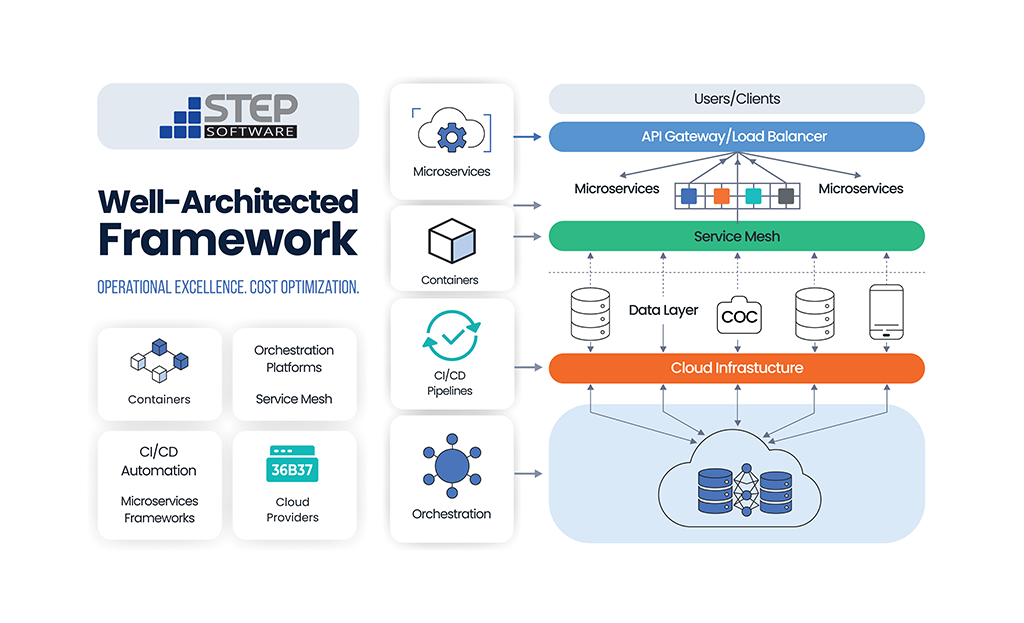
A well-architected system doesn’t panic under pressure.
Using cloud-native patterns like:
- Auto-scaling
- Serverless computing
- Distributed architectures
…ensures your system can handle growth without a complete overhaul.
4. Automate Everything You Can (Strategically)
Manual processes are:
- Slower
- Error-prone
- Expensive
Automation can help improve operational excellence and reduce long-term costs and can help free up valuable resources to work in strategic items.
5. Continuously Optimize (Not Just Once)
Architecture isn’t a one-time decision, it’s an ongoing process.
Regular reviews help ensure:
- Costs don’t creep up
- Performance stays strong
- Early discovery of new risks
The Real Risks (and Why They Matter to Your Budget)
Even with the best intentions, organizations often hit roadblocks:
- Siloed teams (dev, ops, security not aligned)
- Outdated tooling that limits scalability
- Resistance to change (the classic “but it works”)
- Short-term thinking over long-term value
The Well-Architected Framework helps break these bottlenecks by aligning teams around shared principles and tech roadmaps.
Becoming well-architected isn’t automatic. There are challenges:
1. Technical Debt
Legacy decisions pile up over time, making systems harder to maintain and optimize.
Result: Higher costs and slower innovation
Solution: Make tech debt visible, manage it strategically and invest in sustainable , adaptable systems.
2. Over-Engineering
Ironically, trying to follow best practices too aggressively can lead to unnecessary complexity.
Result: Increased costs without meaningful ROI
Solution: Aim for boring. By modernizing and moving toward reliable, well-architected systems, organizations can reduce legacy system maintenance costs and reinvest in growth initiatives.
3. Skill Gaps
Modern architectures require updated expertise especially in cloud, automation, and distributed systems.
Result: Slower adoption and missed opportunities
Solution: One of the most common reasons clients reach out to our Legacy Team is because of a misalignment between in house knowledge and technology needs. Staff Augmentation is a popular, collaborative solution enabling your team to grow skill wise while retaining control of software and projects.
4. Lack of Visibility
If you don’t understand how your system performs or where money is going, optimization becomes guesswork. If your system is not well documented, it only contributes to the challenges.
Result: Budget inefficiencies and surprise costs, and cybersecurity risks
Solution: Document like your code depends on it.
Why This Matters for Legacy Modernization
Here’s where things come full circle.
Many organizations are currently investing in legacy modernization, and for good reason. These systems are the backbone of critical business operations, globally and when systems go down, business stops.
Old systems:
- Drain budgets
- Limit innovation
- Struggle to meet modern performance expectations
By applying Well-Architected principles during modernization, businesses can:
- Reduce infrastructure costs
- Improve application performance
- Enable faster development cycles
In other words:
Modernization without architecture = expensive chaos
Modernization with architecture = strategic advantage
Final Thought: Architecture Is a Business Decision
It’s easy to think of architecture as only a technical concern.
It’s not.
Each architectural decision effects business and budgets. It’s not just tech its:
- How fast your product performs
- How much your system costs
- How easily your business can scale
- Whether you eclipse your competition or fall victim, to innovation drag
The Well-Architected Framework simply gives you a way to make those decisions intentionally.
So, the next time someone says, “We should revisit our architecture,”
don’t hear “pricey, technical overhaul.”
Hear:
“We have an opportunity to improve performance, reduce cost, and future-proof the business.”
And that’s a conversation worth having. Reach out if you want to discuss improving the performance of your software.


