

If there is one thing the first half of 2026 has made clear, it’s that business technology has become a little less about chasing the next shiny object and a lot more about figuring out what really works.
At STEP Software, we’ve written about everything from AI technical debt and data quality to edge computing, embedded systems, cybersecurity, digital sovereignty and software architecture.
On the surface, those topics might look like an eclectic collection.
Look a little closer, though, and three common threads emerge that tell us quite a bit about where software development and business technology are heading.
1. Software Modernization Is Becoming More Important Than Replacement
One of the strongest themes running through our 2026 articles is the realization that software modernization does not automatically mean replacing existing software.
This distinction matters.
Businesses have spent decades building critical software applications around the way they actually operate day to day. Those applications may not be pretty. They may use older programming languages, databases or architectures that would make a modern developer cringe with fear.
But what they often contain, which is even more valuable is business knowledge.
This is why legacy software modernization continues to be such an important conversation for business and technical leaders.
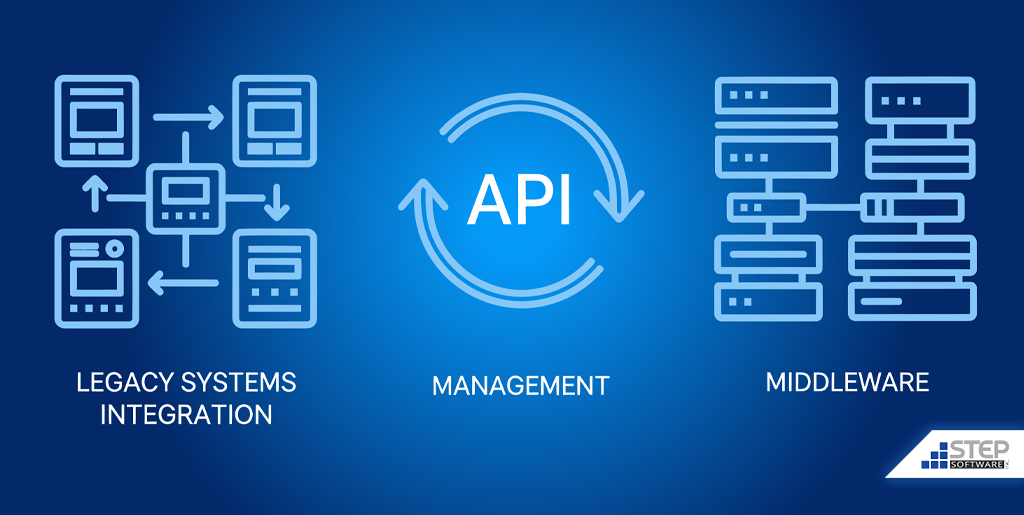
Legacy applications often contain years of business logic, workflows, integrations and institutional knowledge. Replacing them can introduce significant cost and risk, particularly when the existing system remains stable and mission critical.
Modernization does not have to mean starting from scratch. In fact, Google Cloud’s guidance on legacy modernization similarly emphasizes that modernization can involve everything from rehosting and re-platforming to refactoring and replacing individual components.
Sometimes the right answer is a complete replacement. Often, it isn’t.
A legacy application might benefit from a modern user interface. A database might need optimization. Two disconnected systems might need middleware or API integration. A manual workflow might be a candidate for automation. An application might benefit from moving certain workloads to the cloud while keeping other components where they are.
Modernization can be surgical. And in an environment where IT budgets are being scrutinized, that can be a very good thing.
The question isn’t necessarily:
“What should we replace?”
It may be:
“What can we improve without throwing away what already works?”
2. Technical Debt Has Become a Business Problem
The second most common thread is considerably less glamorous, but potentially much more expensive.
Technical debt.
In June, we wrote about being Buried in Technical Debt, following our earlier discussion of AI Technical Debt both of which were predated by The True Cost of Technical Debt from July 2025.
We also explored data quality, credential sprawl and cybersecurity.
These subjects have something important in common: problems that are easy to postpone can quietly become considerably harder and more expensive to solve later.
Technical debt isn’t necessarily the result of bad decisions.
Sometimes it is the result of perfectly reasonable decisions made under pressure.
A company needs a new feature, so the team takes the fastest route.
A system needs to stay online, so the upgrade gets postponed.
A developer leaves, and documentation gets pushed down the priority list.
An integration is held together with a script that everyone knows nobody should touch.
Then another year passes. And another.
And before you know it, the organization isn’t simply maintaining software: it’s maintaining the history of every shortcut it ever took.
The same principle applies to data.
STEP’s Garbage In, Garbage Out: The 2026 Edition explores why data quality has become a business-critical issue. Poor data can undermine software projects, increase operational costs, create security risks and make analytics and automation considerably less effective.
Cybersecurity belongs in this conversation, too.
Our recent article on credential sprawl looks at how unmanaged accounts and access credentials can create costs and security risks that quietly accumulate over time.
Technical debt, poor data and credential sprawl may sound like separate IT problems.
They aren’t.
They are all examples of technology complexity creating a business cost.
This is why technical debt deserves a seat at the business table.
It affects budgets.
It affects productivity.
It affects cybersecurity.
It affects employee experience.
And eventually, it affects how quickly a business can respond when an opportunity appears.
Ignoring technical debt doesn’t make it disappear.
It simply lets the interest accumulate.
3. The Human Side of Technology Matters More Than Ever
The third thread we’ve talked a lot about, is from our perspective, the most important one.

Technology is still about people.
This may sound obvious, but it is remarkably easy to forget when the conversation is dominated by automation, AI, cloud platforms and increasingly sophisticated software.
STEP’s recent conversations around technology and people have reinforced an important point: organizations need to think beyond technology adoption and consider the people expected to build, manage and use that technology.
This matters because technology initiatives don’t happen in a vacuum.
Someone must:
- Implement them
- Maintain them
- Explain them to the business
- Train employees to use them
- Ultimately, make the decisions when the technology should not be used
And someone inevitably must answer the question:
“Why does this button work differently now?”
Technology can improve a business dramatically, but only when people can work effectively alongside it.
This means investing in skills, documentation, communication, usability and good software architecture.
It also means recognizing that developers, IT teams and technical specialists are not infinite resources.
Burnout should not be a capacity-planning strategy.
So, What Does This Mean for the Rest of 2026?
If the first two thirds of the year are any indication, successful IT strategies will be less about doing everything and more about doing the right things, deliberately.
Modernize where and when modernization creates value.
Address technical debt before it becomes an emergency.
Improve data before building another system on top of bad data.
Strengthen cybersecurity and resilience, constantly.
Invest in people as seriously as you invest in technology.
And perhaps most importantly, don’t assume that every technology problem requires a technology replacement.
Sometimes, the smartest investment is the one that makes the technology you already own work considerably better.
And this is where custom software development can become a strategic business tool rather than simply another line item on the IT budget.
A custom software development partner can help organizations assess existing systems, identify modernization opportunities, build integrations, improve applications and create a practical roadmap for technology investment.
STEP Software has spent more than two decades working across the full spectrum of software engineering and custom software development, including legacy systems, modernization and complex business applications.
Because sometimes the smartest technology strategy isn’t buying something new.
It is making what you already have work better.
That has been one of the biggest themes running through STEP Software’s 2026 conversations so far.
Technology doesn’t have to be shiny to be strategic.
Sometimes it just needs to work. Drop us a line if it’s time to review your software landscape and a strategic, budget friendly path forward.


